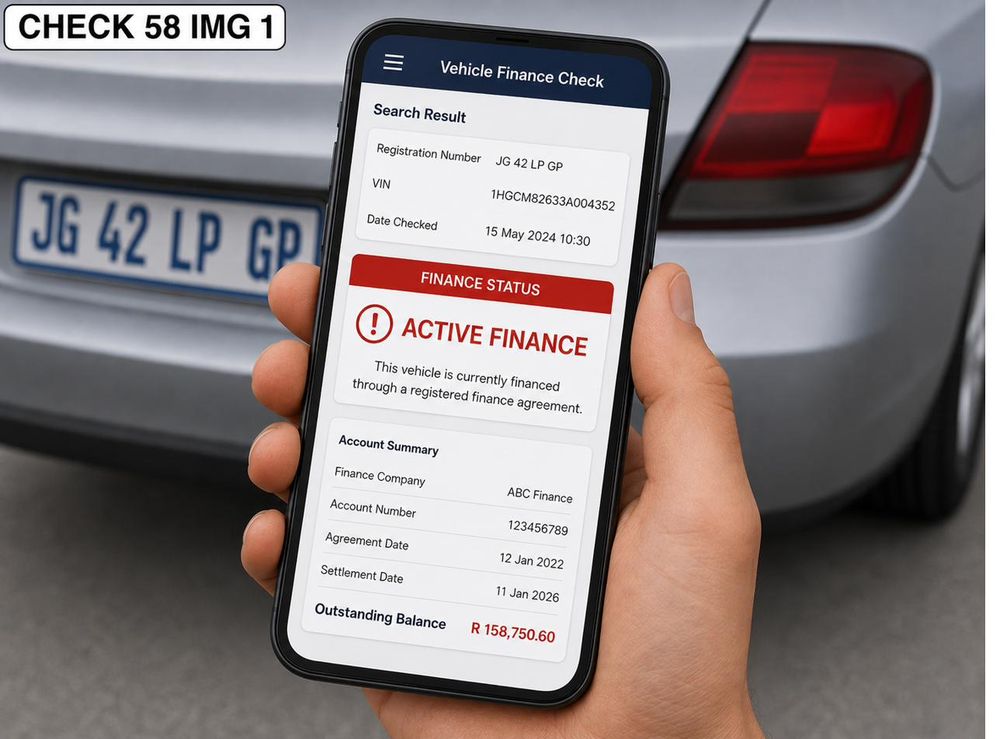
The most common vehicle fraud in South Africa
Outstanding finance scams catch thousands of South African private vehicle buyers every year. The scenario: seller has a car on finance, sells it to you, pockets the money, and stops paying the bank. The bank then repossesses the car — from you. Not from the seller. You lose the car and the purchase price.
The solution costs R19 to R99 and takes two minutes. There is no excuse for not doing this check before any private vehicle purchase.
South African banks hold a lien over financed vehicles. This lien stays with the vehicle, not the person. If you buy a car with outstanding finance and the seller defaults, the bank has the legal right to repossess from whoever currently possesses the vehicle — that's you.
How to run a First Check
Go to firstcheck.co.za. You can search by VIN number or registration number. The check searches the NaTIS system and returns:
- Whether the vehicle has active finance registered against it
- Which financial institution holds the finance
- Whether the vehicle is listed on the theft register
- The registered owner name (compare to seller ID)
- Licence disc expiry date
What to do if finance is found
Do not proceed with any payment until the finance is settled. The correct process is:
- Ask the seller for a settlement letter from the bank showing the outstanding balance
- On transfer day, pay the outstanding balance directly to the bank (not to the seller)
- Pay the remaining balance to the seller only after the bank confirms settlement
- Get a clearance certificate from the bank before proceeding with NaTIS transfer
Any seller who refuses to provide a settlement letter or insists on receiving the full payment before you can confirm settlement should be treated as a red flag. Walk away.
Run First Check before you view the car — not after
The check costs R19–R99. Run it on the registration number before you even arrange a viewing. If finance is active, you can ask the seller about it upfront rather than wasting time on a viewing.
First Check pricing
First Check offers different report levels at different prices. The basic check (R19) covers finance and theft register. The comprehensive report (R49–R99) adds ownership history, licence status, and accident history where available. For any purchase over R80,000, the comprehensive report is worth the extra cost.
Frequently asked questions
Get the Top 10 Critical Checks PDF — free
The 10 checks where SA buyers lose the most money. Print it. Take it to the viewing.
NaTIS documents, roadworthy, service history and outstanding finance — the Documents Inspection Guide walks through every check that protects you from a paper-only scam.
Get the Documents Inspection Guide — R75 →This guide is general information for South African motorists, not financial or insurance advice. Interest rates, premiums and approval criteria vary by lender, insurer and individual circumstances. Always get a specific quote and read the full agreement terms before signing.