Why hail damage is easy to miss
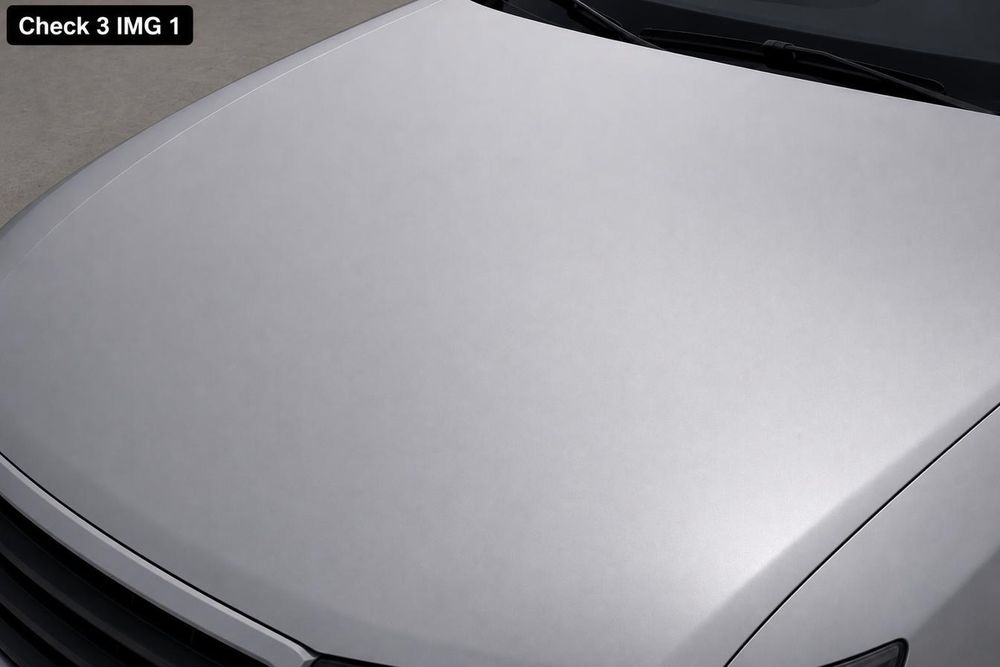
Hail dents aren't like accident damage. There's no crumpled panel, no misaligned gap, no obviously wrong paint colour. A hailstorm produces dozens of shallow, rounded dents spread across the horizontal surfaces of a car — mostly the roof, bonnet, and boot lid, since hail falls more or less straight down. Under the flat, even light of an overcast day or a dealership's fluorescent showroom, these dents can be almost invisible. Most buyers walk straight past a hail-damaged car without seeing a thing, because they're looking under exactly the wrong lighting conditions.
Gauteng and the Free State highveld are among the areas most exposed to severe hailstorms in South Africa, typically during the October–March summer thunderstorm season. A car that's spent its registered life in Johannesburg, Pretoria, or the Vaal Triangle is worth checking more carefully than one from a coastal city where large hail is rarer.
The raking-light technique
The trick to seeing hail damage is changing the angle and direction of the light, not the amount of it. Dents that vanish under flat light become obvious under "raking" light — light that skims across a panel at a low angle instead of hitting it straight on.
- Inspect outdoors in low sun — early morning or late afternoon, when the sun sits low and casts long shadows across the roof and bonnet. Avoid midday and avoid overcast days if you can help it.
- Crouch and sight along the panel — get your eye level down near the edge of the roof or bonnet and look along its length rather than down onto it. Dents that are invisible from above create visible shadow lines from this angle.
- Use a phone torch as a backup — in a garage or at night, hold a torch low and to the side of the panel rather than pointing it straight down. The same raking principle applies.
- Run a flat hand across the panel — dents you can't quite see, you can often feel as shallow depressions when you slide your palm flat across the roof and bonnet.
Where to look first
| Panel | Hail exposure | What to check |
|---|---|---|
| Roof | Highest | Most exposed surface — dense dent clusters are most visible here first |
| Bonnet | High | Second most exposed — check both under raking light and by feel |
| Boot lid | High | Same exposure as the bonnet, often overlooked by buyers |
| Front wings, top edges | Moderate | The uppermost, flattest sections take some hits; door tops less so |
| Doors, lower panels | Low | Mostly vertical surfaces — hail rarely leaves marks here unless wind-driven |
Paintless dent removal — and its limits
Paintless dent removal (PDR) is the standard repair for hail damage. A technician accesses the back of the panel and massages each dent back into shape without cutting the paint, which is why a well-executed PDR job can be genuinely invisible and completely safe — it doesn't compromise the panel's strength or the paint's integrity.
PDR has limits, though. It works well on shallow, rounded dents on a flat panel. It struggles with dents that are too deep, too sharp, or too close to a body line or panel edge — those often need conventional filler and a repaint instead. A car with dozens of dents from a serious storm sometimes gets a mix: most panels PDR'd cleanly, a handful filled and repainted where the dents were too severe.
If a seller says the car has never had panel work, but a paint thickness gauge shows a reading on the roof or bonnet that's noticeably higher than the rest of the car (typically more than 30–50 microns above the surrounding panels), that panel has filler and a repaint under it — regardless of what you were told. See our paint thickness gauge guide for how to use one properly.
Why a rushed repair is worse than no repair
A dealer or seller who wants to move a hail-damaged batch of cars quickly sometimes opts for the cheapest fix rather than the correct one: filler smoothed over a dent that could have been PDR'd properly, followed by a quick respray to match. Filler over unprepared, still-slightly-deformed metal is more prone to cracking and moisture ingress over time than a correctly panel-beaten repair, which can let rust start underneath where you can't see it until the paint eventually bubbles.
Any bubbling, rippling, or slightly uneven paint texture on a horizontal panel — especially one that also fails the paint thickness check — suggests filler starting to fail over trapped moisture or rust. Budget for a full repaint of that panel, or use it as serious negotiating leverage.
What this means for negotiation
Confirmed hail damage — repaired or not — is legitimate leverage. An unrepaired car should be priced to reflect the cost of a proper PDR job (often a few thousand rand for a full car, more if filler and paint are needed on multiple panels). A repaired car with a thickness-gauge anomaly should be priced to reflect the risk of a redo. Either way, get quotes from a PDR specialist before you finalise a number — see our negotiation guide for how to use inspection findings as leverage rather than just a reason to walk away.
Check under the right light, not just any light
Hail damage isn't hidden — it's just invisible under the lighting most people inspect a car in. Raking light across the roof and bonnet, combined with a paint thickness check on any panel that looks slightly off, catches almost everything. A well-repaired hail car isn't necessarily a bad buy; a badly repaired one is a rust problem waiting to surface.
Frequently asked questions
Get the full 60-point inspection checklist — free
The complete inspection system for SA used car buyers. Print it. Take it to every viewing.
Paint, panels, glass, lights, tyres and rust — the Exterior Inspection Guide covers every visible red flag with SA repair costs and walk-away triggers.
Get the Exterior Inspection Guide — R75 →This guide is general information for South African motorists, not a substitute for a professional pre-purchase inspection. Mechanical faults can be hidden or intermittent. Always have a qualified mechanic physically inspect the specific vehicle before you buy.