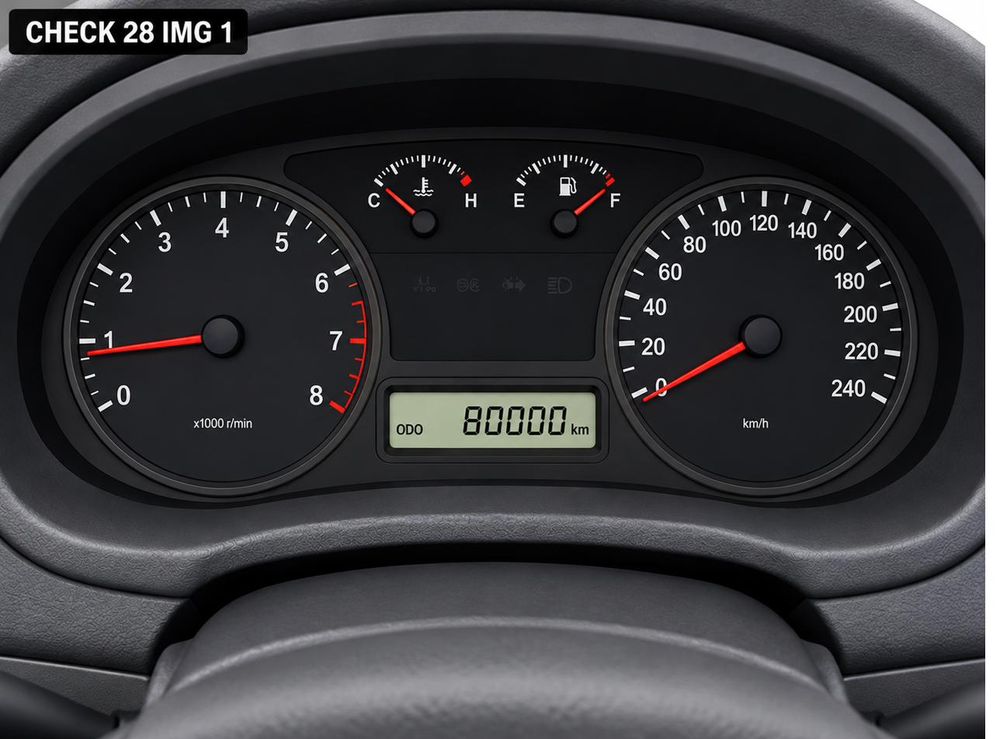
Why odometer fraud is so common in South Africa
Rolling back an odometer used to require dismantling the instrument cluster and physically winding back a mechanical dial. Modern vehicles use electronic clusters that store mileage data in the ECU, the instrument cluster module, and sometimes a third location. All three can be rewritten with a laptop and a cheap OBDII tool available on Takealot for under R500.
The motive is straightforward. A 2015 Volkswagen Polo with 80,000 km on the clock is worth R15,000–R25,000 more than the same car with 200,000 km. Rolling the odometer back takes less than 30 minutes and costs almost nothing. It is one of the highest-return frauds available to dishonest sellers in the SA used car market.
Odometer fraud is a criminal offence under the Consumer Protection Act and the Road Traffic Act. However, prosecutions are rare and civil action against a private seller is expensive and uncertain. Your best protection is catching it before you buy.
The service book maths check — do this first
Before you even look at the car, ask for the service book. Compare the mileage recorded at each service stamp to the odometer reading you see today.
Two things must be true for the service history to be legitimate:
- The mileage at each stamp must be higher than the previous stamp — the numbers must increase continuously
- The gap between stamps must be realistic for the service interval — typically 10,000–15,000 km per year for normal use
If a 2015 car has stamps showing 15,000 km in 2016, 28,000 km in 2017, 43,000 km in 2018 — and then the odometer today reads 75,000 km — that progression is plausible. If the odometer reads 62,000 km but the last service stamp says 80,000 km, someone has rolled it back after the service.
A service book where the mileage at any stamp is higher than the current odometer reading is definitive proof of odometer fraud. Walk away.
Annual mileage — the reality check
South African drivers average 18,000–25,000 km per year on daily drivers. Taxi and delivery vehicles can reach 80,000–100,000 km per year. Use the vehicle's age and registration date to calculate what the realistic mileage range should be.
| Vehicle age | Realistic mileage range | Suspiciously low |
|---|---|---|
| 3 years | 54,000–75,000 km | Under 30,000 km |
| 5 years | 90,000–125,000 km | Under 50,000 km |
| 8 years | 144,000–200,000 km | Under 80,000 km |
| 10 years | 180,000–250,000 km | Under 100,000 km |
These are averages. Low mileage is not automatically fraud — a pensioner's second car or a vehicle that spent years stored are legitimate exceptions. The question is whether the seller can explain the low mileage with evidence.
Physical wear checks — what the car tells you
Mileage leaves physical evidence that cannot be reset with a laptop. Check these against the claimed odometer reading.
Steering wheel and gear lever wear
A genuine 60,000 km car has a steering wheel with minimal wear. A 200,000 km car that has been clocked to 80,000 km will have a steering wheel that looks old — faded leather, worn contact patches, a shiny gear knob. These cannot be faked without replacement, and replacement parts themselves leave evidence (new steering wheel on a 10-year-old car with original everything else).
Pedal rubber condition
Brake, clutch, and accelerator pedal rubber wears proportionally to mileage. High mileage cars have smooth, sometimes cracked pedal rubbers. A car claiming 50,000 km with worn-through pedal rubber has been driven much further than that.
Driver's seat bolster wear
The outer edge of the driver's seat bolster — where you slide in and out — wears with every entry and exit. On genuine low-mileage cars it is still padded and firm. On high-mileage cars it is compressed, cracked, or worn through regardless of what the odometer says.
Door sill scuff plates
The plastic or metal sill plate where your foot drags when entering the car accumulates wear marks proportional to use. Heavily scuffed sills on a supposedly low-mileage car is a warning sign.
Engine bay wear indicators
High-mileage engines accumulate surface grime, oil weep staining around gaskets, and general aging that a fresh engine service cannot fully hide. A freshly steam-cleaned engine bay on a high-mileage car removes the obvious grime but cannot restore the aged look of hoses, brackets, and plastic components.
In SA's hot climate, rubber components — hoses, seals, and belts — age faster than in cooler countries. A car with 80,000 km on the clock but cracked coolant hoses and perished belt surfaces has accumulated more real-world heat cycles than the odometer suggests.
The OBDII verification — the most reliable check
The vehicle's ECU stores a mileage record independently of the instrument cluster. A basic OBDII scanner can read stored mileage data from the ECU on most post-2000 vehicles. If the ECU mileage differs from the dashboard odometer, the cluster has been tampered with.
A mid-range scanner (R800–R2,500) with live data capability can read this. Alternatively, any automotive electrician or diagnostic workshop can do it for R200–R500. On high-value purchases this check is worth doing before signing anything.
Not all scanners can read stored mileage history on all vehicles. Some sophisticated fraud operations write back all three ECU mileage locations simultaneously. OBDII verification reduces risk but does not eliminate it entirely. Use it as one check in a set, not a single pass/fail test.
Service history verification — calling the dealer
If the vehicle has a franchise dealer service history, you can verify it. Phone the dealer whose stamps appear in the book, provide the registration number, and ask them to confirm the mileage recorded at the last service in their system. Most dealers retain this data. Discrepancies between their records and the service book are evidence of forgery.
This takes five minutes and costs nothing. On any vehicle above R100,000 it is worth doing.
Tyre age versus claimed mileage
Tyre date codes are stamped into the sidewall as a four-digit number — the first two digits are the week of manufacture, the last two are the year. A car showing 70,000 km on original tyres fitted in 2018 would have covered those 70,000 km in roughly 6–7 years. That means the tyres should show meaningful wear. Original tyres with barely any wear on a 6-year-old car suggest the actual mileage is much lower — or the tyres have been replaced to hide evidence of higher mileage.
What to do if you suspect odometer fraud
Do not confront the seller directly until you are clear of the situation. If you are still at the viewing, decline politely and leave. Then:
- Report to the Consumer Goods and Services Ombud if the seller is a dealer
- Report to SAPS if you have evidence of deliberate fraud
- Report to the Motor Industry Ombudsman of South Africa (MIOSA) for dealer complaints
- If you have already purchased and discovered fraud afterwards, consult a consumer law attorney — the Consumer Protection Act gives you grounds to cancel the purchase
If you purchased a vehicle and later discovered odometer fraud, act quickly. The Consumer Protection Act allows cancellation of a sale and full refund where material misrepresentation occurred. Document everything — photos of the service book, odometer, wear points, and any communications with the seller. Time is a factor in these claims.
The maths check catches most fraud
Service book maths — comparing stamp mileages against each other and against the odometer — catches the majority of odometer fraud before you need any tools. Add the physical wear checks and you have caught most of what exists in the SA used car market. An OBDII scan is the final layer for high-value purchases.
Frequently asked questions
Get the full 60-point inspection checklist — free
The complete inspection system for SA used car buyers. Print it. Take it to every viewing.
Dashboard warning lights, electrics, air conditioning, seat condition and odometer verification — the Interior Inspection Guide covers what's easy to miss from the driver's seat.
Get the Interior Inspection Guide — R75 →This guide is general information for South African motorists, not legal advice. NaTIS records, VIN data and legal definitions can change or vary by case. Always verify current status directly with NaTIS/eNaTIS or a qualified attorney before relying on this information.